
Most people believe they are good listeners. Most people are wrong.
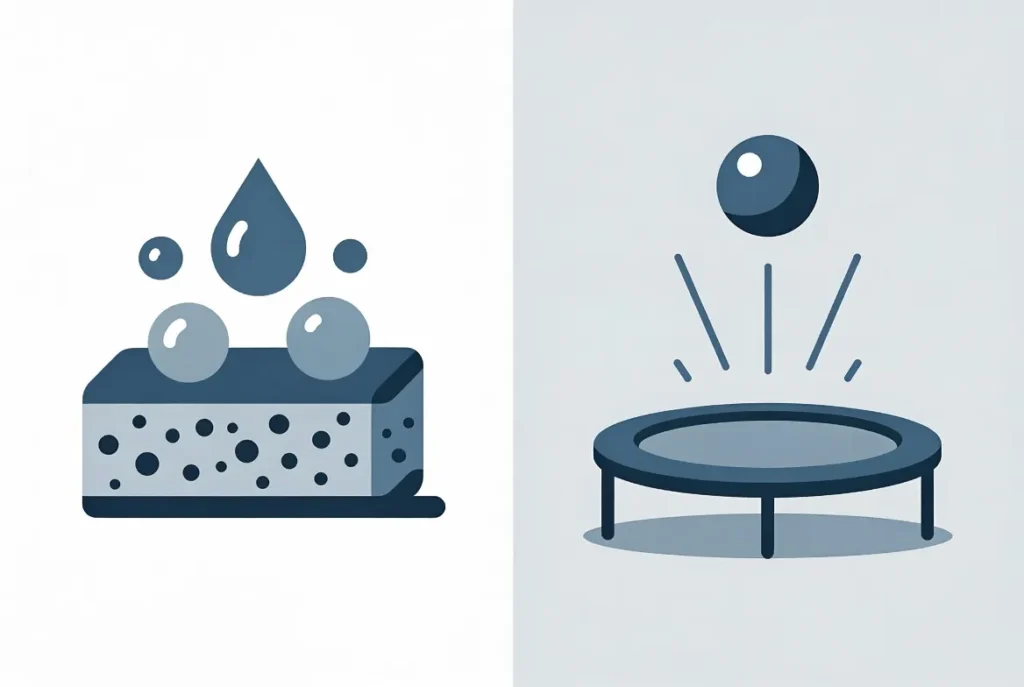
Research by Zenger/Folkman suggests that the average person functions as a “Sponge Listener”—they passively absorb information, nodding along while waiting for their turn to speak. They hear the words, but they miss the signal.
High performers and elite leaders operate differently. They are “Trampoline Listeners.” They absorb ideas and bounce them back amplified, clarified, and energized.
But here is the critical gap that most “soft skills” training misses: Listening is a precursor to action. If you nod empathetically but fail to execute, trust erodes faster than if you hadn’t listened at all.
This guide provides a professional toolkit to bridge that gap. We are moving beyond the “talking stick” games of elementary school. These are rigorous drills designed to rewire your default neurological responses, grounded in our comprehensive communication relationships guide.
Section I: The Core Mechanics (Before the Exercises)
Before you practice the drills, you must understand the operating system of elite listening. It requires managing your own cognitive load while decoding the other person’s intent.
The 3 Principles of Elite Listening
1. The LARA Method
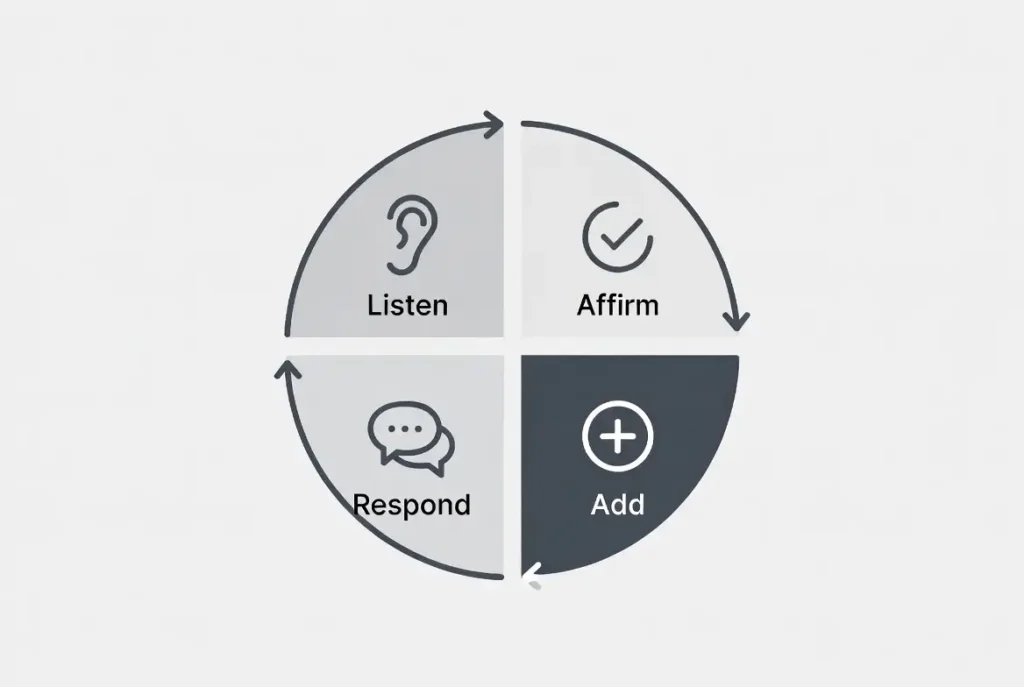
This is your standard operating procedure for any high-stakes conversation.
- Listen: Focus entirely on the speaker (no phone, no mental rehearsal).
- Affirm: Validate their perspective (“I see why that matters to you”).
- Respond: Address their points directly.
- Add: Contribute value, insight, or action (The Trampoline Effect).
2. Adaptive Listening Protocols
You cannot listen to a venting spouse the same way you listen to a project manager reporting a crisis. You must consciously choose your “Listening Hat”:
- Task-Oriented: Listening for data, deadlines, and deliverables.
- Relational: Listening for emotion and connection (crucial for emotional intelligence in the workplace).
- Critical: Listening to evaluate logic and strategy.
3. Nonverbal Congruence
Your face must match your ears. Mirror neurons in the speaker’s brain are constantly scanning your body language for threats or disinterest. If you say “I’m listening” but your arms are crossed and your gaze is drifting, the biological signal overrides your words. To master these signals, refer to our body language reading guide.
Section II: Solo Drills (Mental Discipline)
Great listening starts in your own head. These exercises are designed to tame the “internal monologue” that drowns out external input.
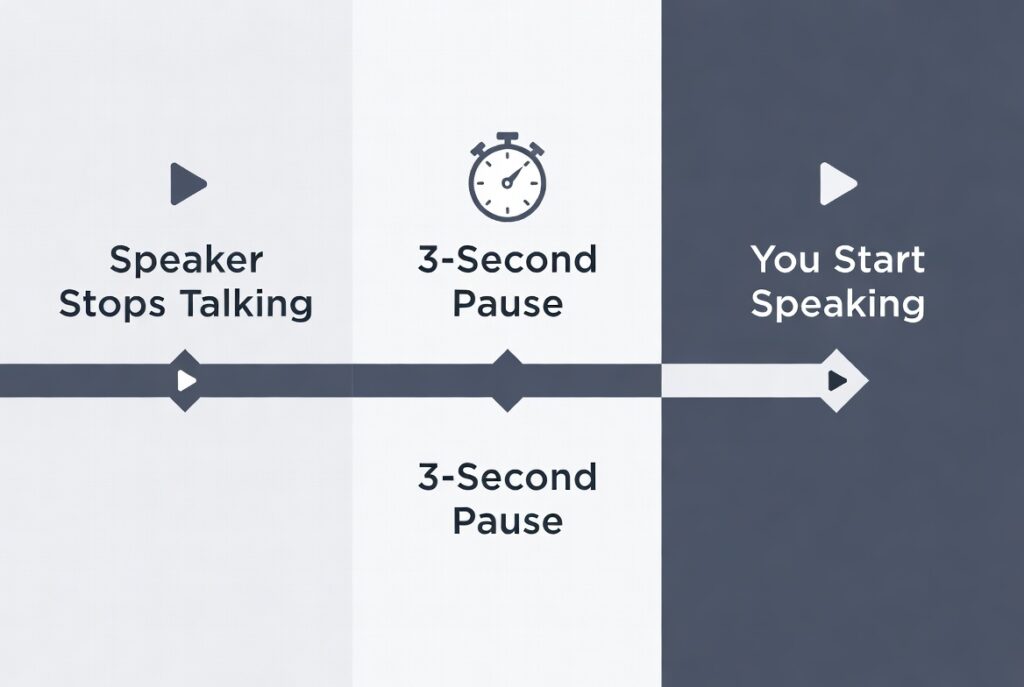
Exercise 1: The 3-Second Pause
The Problem: The “Rebuttal Brain.” High achievers often process information fast and interrupt to “solve” the problem quickly.
The Drill:
- When the other person stops speaking, physically count to three in your head (One Mississippi, Two Mississippi, Three Mississippi) before you engage your vocal cords.
- The Science: This pause allows the speaker to add a “trailing thought” (often the most important part) and signals that you are processing, not just reloading.
Exercise 2: The “Loud Brain” Audit
The Problem: Your internal narrative (judgment, to-do lists, anxiety) consumes your cognitive bandwidth.
The Drill:
- During a conversation, catch yourself drifting.
- Mentally label the distraction: “That is judgment” or “That is a to-do list item.”
- Visualize putting that thought in a box and closing the lid. Return to the speaker.
- Goal: Increase the duration of your focus intervals. This is a foundational mindfulness exercise applied to conversation.
Exercise 3: The Media Summary
The Problem: Listening for facts while missing the subtext.
The Drill:
- Listen to a 5-minute segment of an interview podcast.
- Pause and summarize only the emotions the guest expressed, not the content.
- Why it works: It forces you to switch from analytical processing to empathetic processing, a key component of empathy skills.
Section III: Partner/Team Drills (Interactive)
These drills require a partner—a colleague, a spouse, or a mentor. They are designed to create a feedback loop that confirms accuracy.
Exercise 4: The “Looping” Technique
The Goal: Total alignment and validation.
The Drill:
- Speaker shares a thought (1-2 minutes).
- Listener repeats back what they heard, using the phrase: “What I’m hearing you say is…”
- Speaker must confirm with “Exactly” or correct the record.
- Loop continues until the Speaker says “Exactly.” only then can the Listener introduce their own opinion.
- Note: This is the practical application of the observation phase found in a nonviolent communication summary.
Exercise 5: “Omit the Obvious”
The Goal: Identifying the “Elephant in the Room.”
The Drill:
- After a meeting or difficult conversation, debrief with a trusted peer.
- Ask: “What was NOT said in that room?”
- Identify the fears, hesitations, or power dynamics that were present but unspoken.
- Discuss how to bring these to the surface using radical candor examples or assertive communication techniques.
Exercise 6: The “Action Audit”
The Goal: The ultimate proof of listening.
The Drill:
- End every substantive conversation with a summary of action.
- Script: “Based on what you’ve told me, here are the three things I am going to do differently starting tomorrow…”
- If you cannot list specific actions, you likely haven’t listened well enough to solve the problem.
Section IV: Context-Specific Application (The Modern Gap)
Listening changes when the environment becomes hostile or digital.
Exercise 7: The Virtual Eye Contact Drill
The Context: Remote work and Zoom fatigue.
The Drill:
- When you are the listener, hide your “self-view” to stop checking your appearance.
- When the other person is speaking emotionally or strategically, look directly at the camera lens, not their face on the screen.
- Why: To them, it looks like you are making direct eye contact. It simulates intimacy in a digital void.
Listening Under Pressure: When You Are Triggered
It is easy to do these exercises when you are calm. It is nearly impossible when you are angry.
- The Protocol: When you feel your heart rate spike (amygdala hijack), you must verbally pause the conversation.
- Script: “I want to listen to this, but I’m reacting emotionally right now. I need 10 minutes to reset so I can hear you properly.”
- This prevents damage and sets the stage for healthy conflict resolution strategies. For more on navigating these tense moments, review our guide on how to have difficult conversations.
Conclusion: Listening is a Leadership Superpower
Active listening is not a passive act of silence. It is a high-energy pursuit that builds the psychological safety necessary for high-performing teams and resilient relationships.
Your Challenge: Do not try to do all 7 exercises tomorrow. Pick one (like the 3-Second Pause) and use it in every interaction for the next 48 hours.